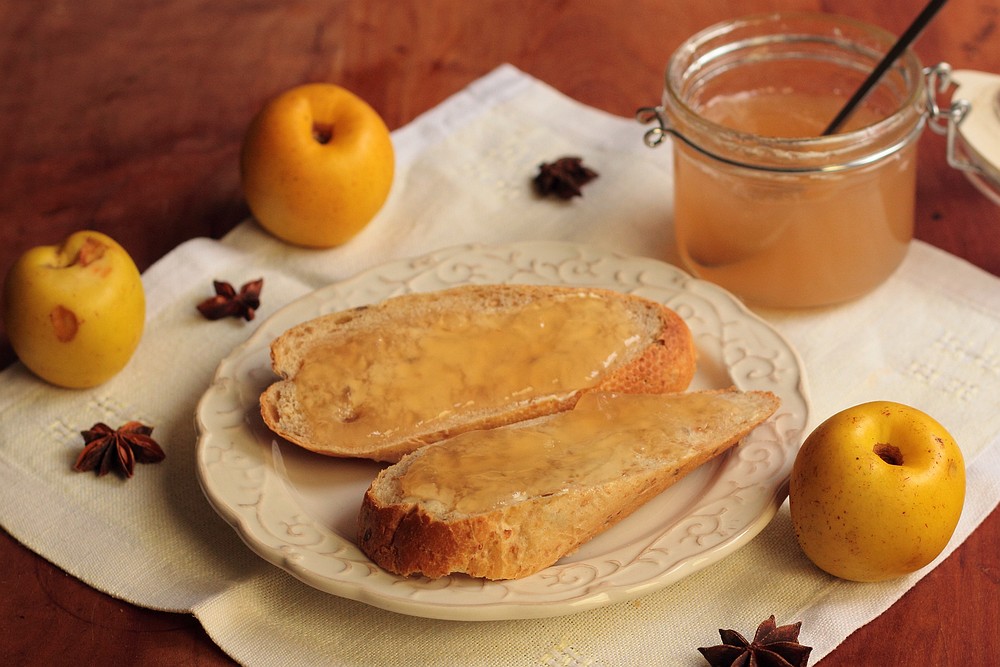
It looks like a quince, it smells like a quince and it is rock hard, just like a quince.
What is it?
Well, it is almost a quince. It is a relative, it is Japanese quince.
Though the Japanese quince (Chaenomeles) is usually planted for its flowers, the smallish fruits are edible too. The taste is almost identical to the true quince (Cydonia oblonga) and they can be used in the same way. I got a bucket from friends who have one shrub in the garden and are aware of their edibility, but were at a loss as to how to use them. I happily took them on and promised a jar of jelly in return.
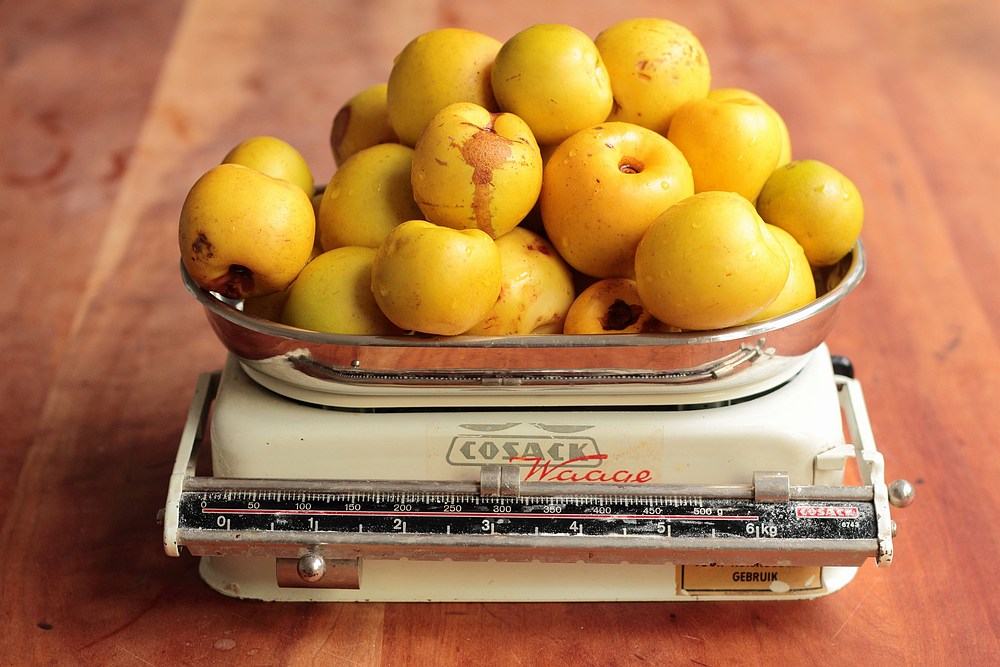
Because Japanese quince is a pretty, easy to grow bush, it is present in many gardens that are not primarily edible. Here in the Netherlands it is also a very popular plant for urban landscaping and thus great for city foraging.
Just like the true quince the fruits of the Japanese quince are astringent and harsh when raw but become aromatic and pleasant when cooked. Use them for jams or jellies, on their own or combined with apples. The fruit is best harvested after a frost.
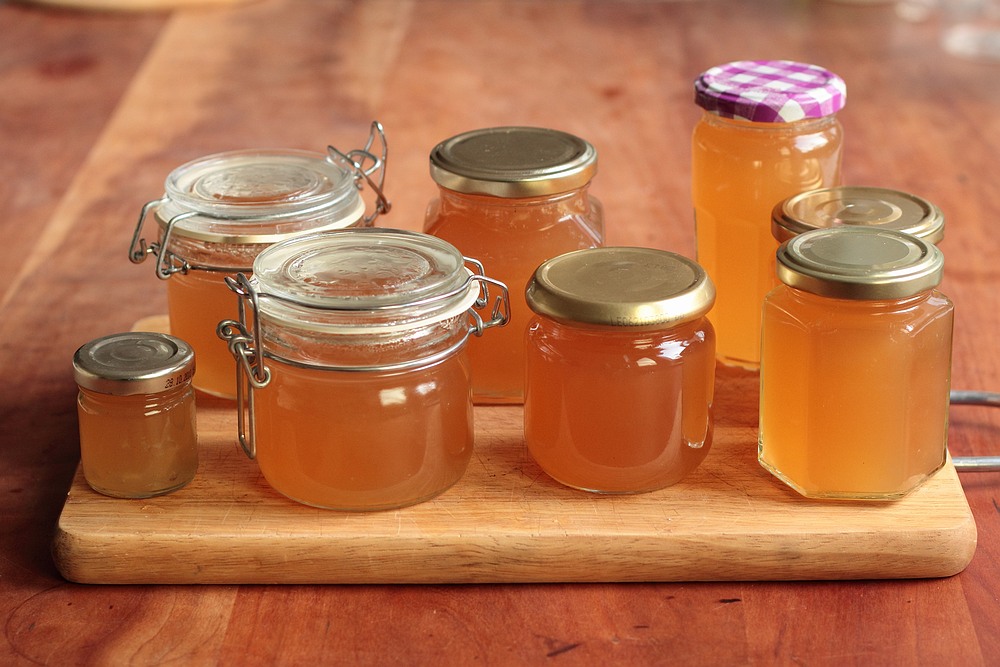
Japanese quince jelly with star anise
If you don’t have enough quince, you can substitute part apples or crabapples, another ornamental edible. The recipe can be used for true quince (Cydonia oblonga) as well. To set the jam, I use Marmello, which is a Dutch brand of organic citrus pectin powder, sold in little packets of 25 g. The use of pectin allows the jam to set with a smaller amount of sugar. You can of course substitute a different pectin brand. If you can’t find it, or prefer your jelly sweeter, it is possible to make the jelly with just sugar, but more of it is needed for the jelly to set (see bellow for amounts) and it takes a lot more time – about half an hour. But because of the longer cooking time, the jelly will also turn a beautiful reddish colour.
2 kg (4 1/2 pounds) Japanese quince (or a mix of Japanese quince and apples)
3 pieces of star anise
about 2 liters (8 cups) water
2 x packets (50 g) of Marmello (citrus pectin powder) mixed with 600g (3 cups) sugar
or
450 g (1 pound) of sugar to every 600 ml (2 1/2 cup) of liquid
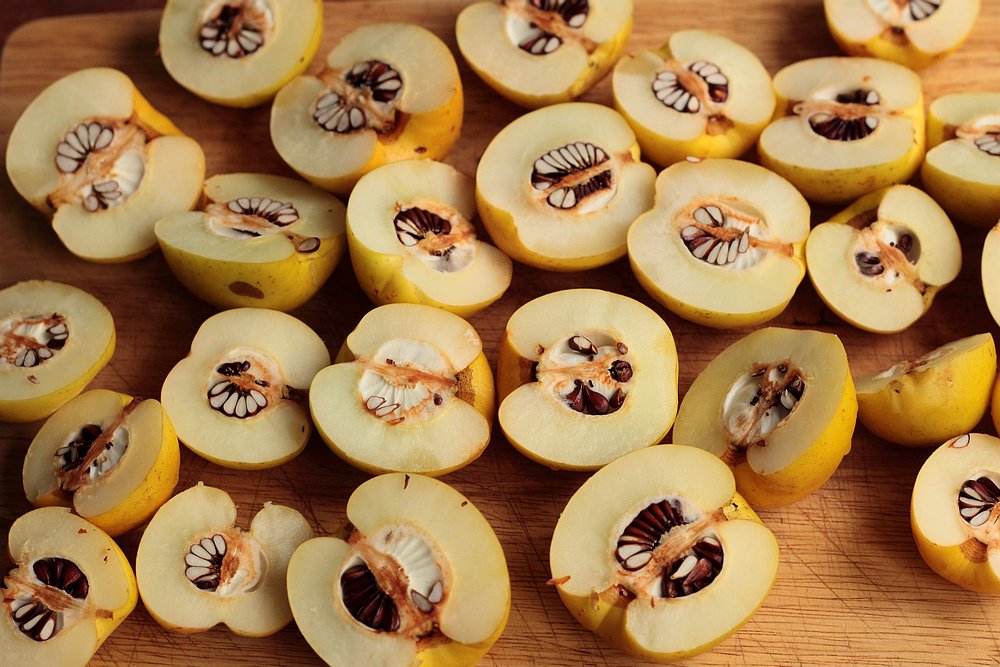
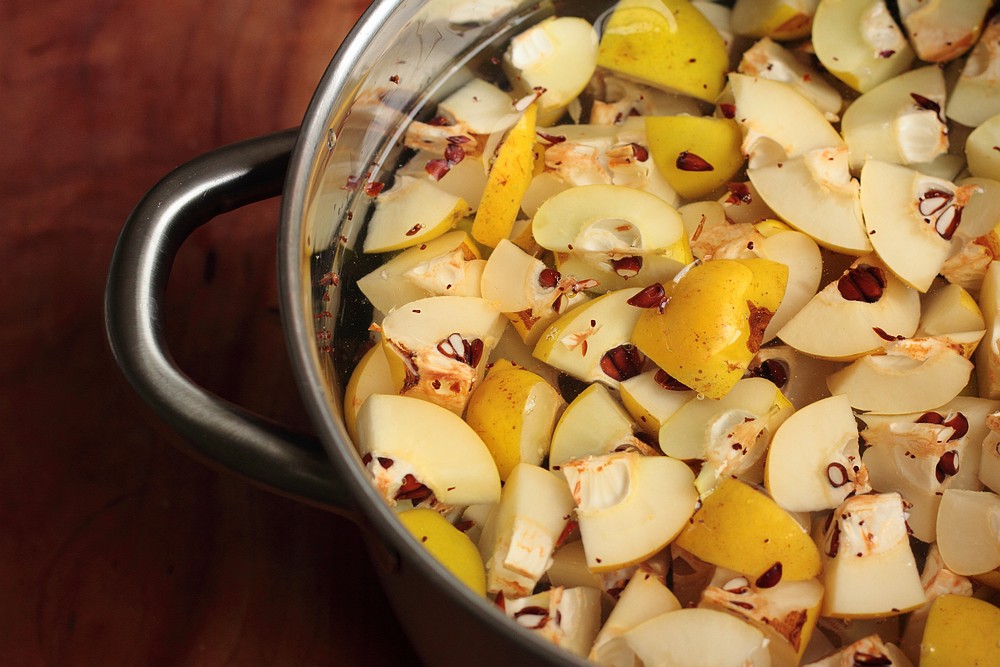
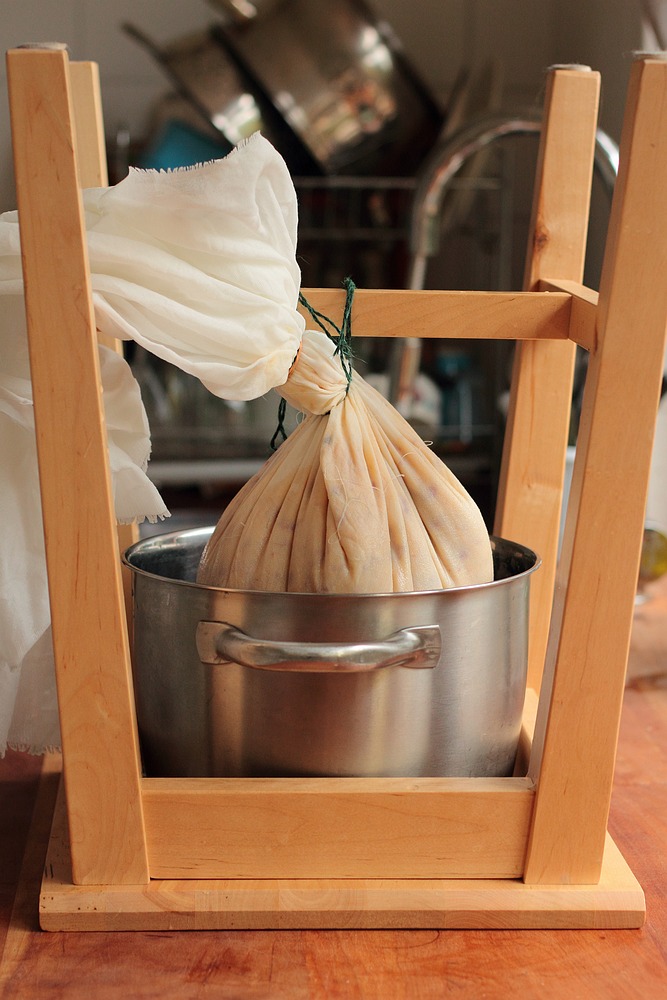
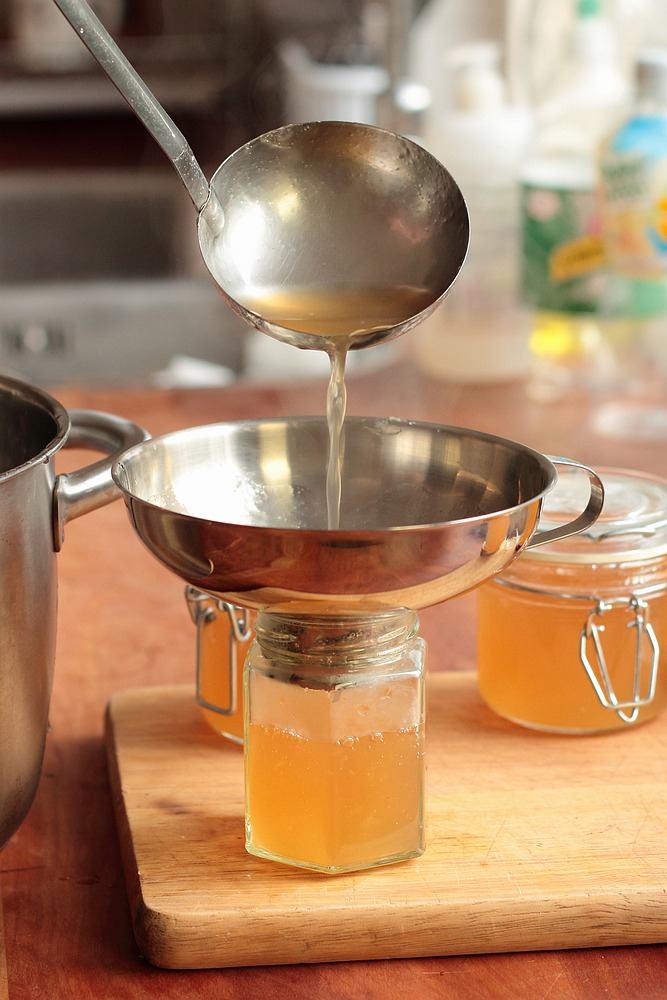
Roughly chop the fruit – be careful, it’s rock hard. Put it in a large pan together with the star anise and cover with water – I used 2 liters. Cook until the fruit falls apart, which takes about an hour and a half. Mash with a potato masher and pour into a colander lined with cheesecloth. Tie the cheesecloth together and suspend it over a large pan (see photo). Let it drip overnight and don’t be tempted to squeeze the cloth or the jelly will be cloudy. This amount yielded 1,5 liters of liquid. Bring the liquid to boil and add the Marmello mixed with sugar. Boil for 1 minute and pour into sterilized jars. Turn the jars upside down for ten minutes. The jelly will keep for about a year. Once open, store in the refrigerator and use within a week.
If making the jelly with just sugar:
Prepare the quince as directed above.
Bring the strained liquid to the boil, than add sugar and stir to dissolve it. Boil rapidly until the jam reaches setting point. This you can test by putting a teaspoonful of the jam on a cold saucer (I keep it in the fridge) and leaving it to cool. If the jam wrinkles when you push it with your finger, it’s ready. In my case the jam took about half an hour to reach the setting point. Remove any scum that has formed.
Carefully pour the jam into the jars, close them and turn the jars upside down for ten minutes.
12 comments for “Japanese quince jelly with star anise”